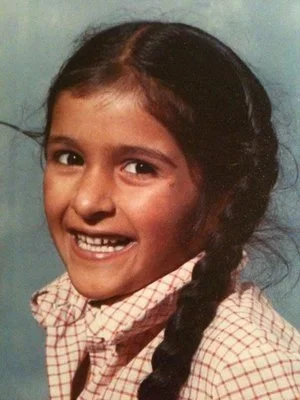
My first home was my mother
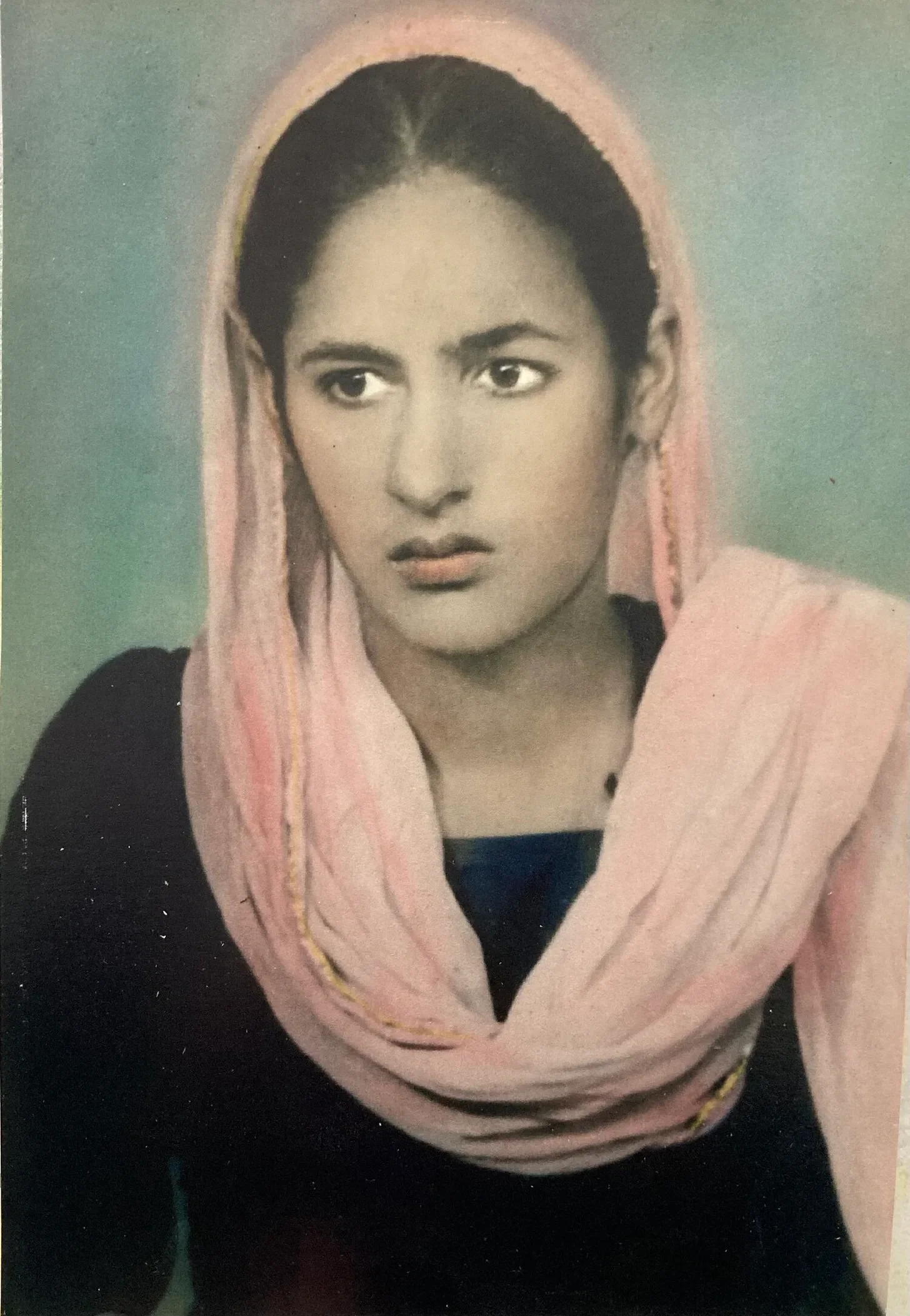
My mother, Rishpal Kaur, 1959.
My first home was my Mother and for nine months we both lived at latitude 53 degrees North and Longitude -1.49 degrees west. I was squish-curled and tiny in the stretching darkness, wriggling my little appendages, moving my body within the tight heat of her. I dreamt of another home too, 9000 miles away, of Null, District Jalandhar. Or was I dreaming my Mum’s dreams of home? For five months, around 1938, a half-bit of me lived within the whole-bit of my Mum, inside my Grandmother’s body. We’ve been together for a long time. We were defiant glints on the horizon of a crumbling Empire, a refusal to give in, waiting for the emergence of a new dawn.
When I demanded my independence in 1968, impatient for light and air, Mum let me out of her, onto the big bed, and inside my second home. By the time I was 4 years old, I could tell people, I lived at number 10 Northumberland Road, telephone number Sheffield 23717. It was the house with the front door that was painted in a sludgy mustard yellow. There were red, yellow, pink and orange rose bushes that filled the front garden, throughout the summer months.
In the little attic, my Dad had made Sheffield’s first Gurdwara (allegedly…), decorating the sloping ceilings with Christmas baubles and shiny garlands. A copy of the Guru Granth Sahib, rested wide open on the takht. It was covered by a bright ramala, a gold trim edging the cloth which had been meticulously hand sewn on by Mum. Every Sunday morning, we crammed into the tiny temple, my two elder sisters, my brother, Mother and I along with one or two Sikh friends, usually male.
It felt like our own weekly version of Christmas. After prayers, instead of Christmas pudding, my father would drop a sweet dollop of hot kra prashad into our raised and cupped palms. This sacred halva was made of equal parts of wholewheat flour, clarified butter and sugar. In later years, I learned it was created like this, to reflect the core Sikh philosophy of equality, between Sikh men and women. Perhaps that’s why I loved it so much, scooping secret handfuls from the remainders in the fridge – subconsciously trying to eat my share of equality, before my brother could gobble it all.
In the years before I was born in my second home, in a bedroom which was really the bay windowed dining room, each of the four double bedrooms in 10 Northumberland Road housed newly arrived families from Ireland, Jamaica, Pakistan or some of the local university students. For 15 years, Our Number 10 represented a stepping stone to hope and freedom, in the shape of an old Edwardian stone semi.
I imagine the air would’ve been filled with the mingling fragrance of boiling potatoes, frying spam, freshly ground garam masala, a drift of incense, burning coals, sweating bodies – the walls reverberating with –many tongues –patois, Urdu, Punjabi and undulations of Irish accents. I wonder what it sounded like, with them all crammed together, their voices, their lives lived out at Number 10, with only 1 bathroom between them, the daily hum of elsewheres coming together.
Dal Kular ©️ This short essay was written during an Arvon writing week at Lumb Bank, Yorkshire, September 2023. Funded by Arts Council England.